
Invest in Dubai Off-Plan With a Clear Strategy
We help you choose the right projects, understand payment plans and manage risk-so you're not just buying a brochure and a promise.
We work with multiple developers, not just one. No pressure, no spam.

Why Off-Plan Buyers Work With RE/MAX HUB
Multiple Developers
We work across projects from Emaar, Sobha, Damac, Binghatti, Beyond and more.
Data & Due Diligence
We review masterplans, payment plans and historical track records before recommending anything.
End-to-End Support
From early launch allocations to handover and leasing/resale strategy.
How We Help You Choose the Right Off-Plan Project
A structured process that balances opportunity and risk.
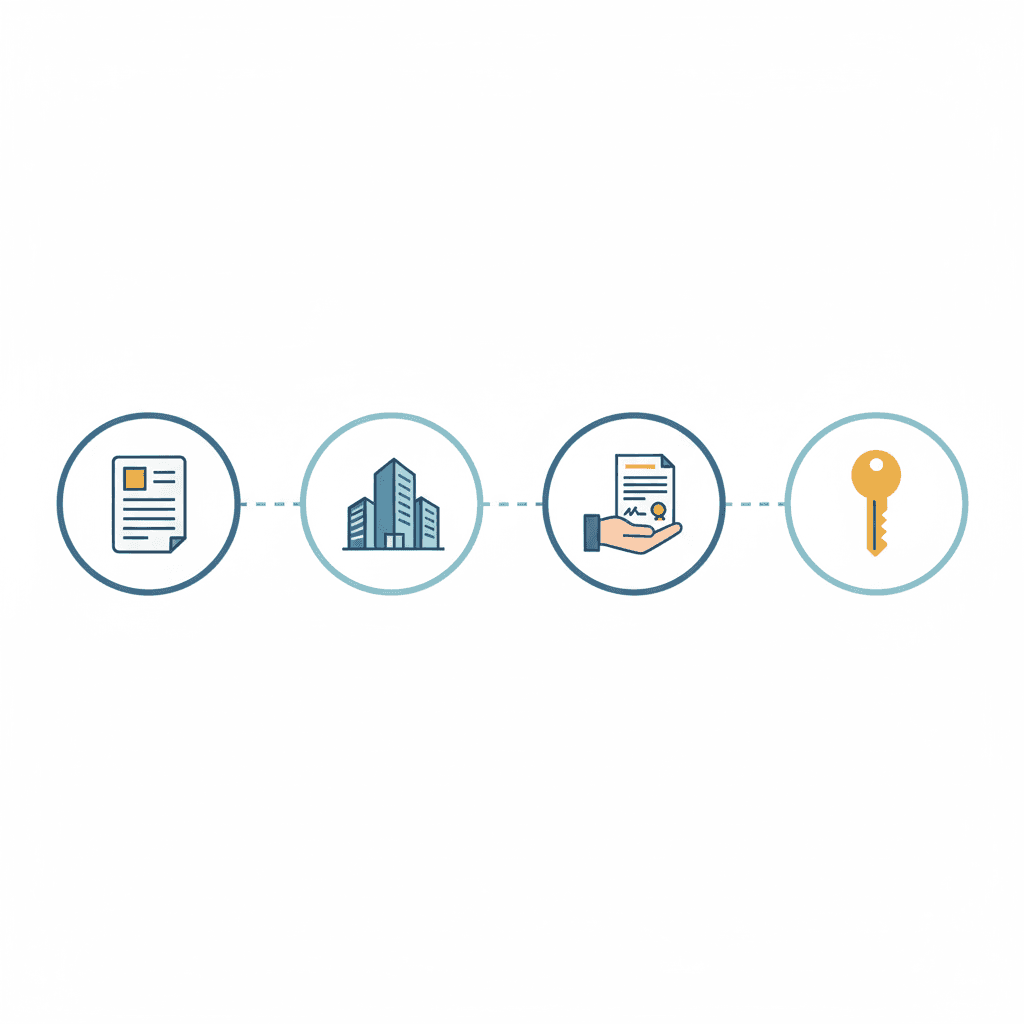
Strategy & Budget
Clarify your goal (home vs investment), risk tolerance, budget and time horizon.
Project & Developer Selection
We shortlist projects and developers that match your profile, showing pros/cons-not just launch hype.
Payment Plan & Contract Review
We explain the payment schedule, escrow, DLD registration and key contract points in plain English.
Construction Updates & Exit Plan
We stay involved through construction, handover and help you plan leasing or exit when the time is right.
Is Off-Plan Actually Right for You?
Off-Plan may be a good fit if:
- You have a 2–7 year horizon and don't need to move in immediately.
- You want payment plans or lower entry price vs ready property.
- You're comfortable with some construction and timeline risk.
- You care about new communities, amenities and facilities.
Off-Plan is probably not for you if:
- You need to move in within the next 6–12 months.
- You're depending on immediate rental income.
- You can't tolerate construction delays or design changes.
- You're chasing "quick flip" rumors more than fundamentals.

Featured Off-Plan Projects We Currently Recommend
Handpicked based on developer track record, location and payment terms.
Developers We Work With (and Why)
We don't push a single developer's stock. We work across multiple UAE developers and give you a view on track record, delivery, and after-sales.
Emaar
Large master-planned communities and strong brand recognition.
Sobha
High-spec finishes and integrated communities.
Damac
Diverse portfolio across Dubai with varied price points.
Binghatti
Distinctive designs and active pipeline across Dubai.
Beyond
Focused developer with niche projects.
Mira
Family-oriented communities with strong amenities.
Object One
Boutique developments with unique positioning.
Peace Homes
Value-focused projects in emerging areas.
How Off-Plan Payment Plans Actually Work
Understand the cashflow before you sign anything.
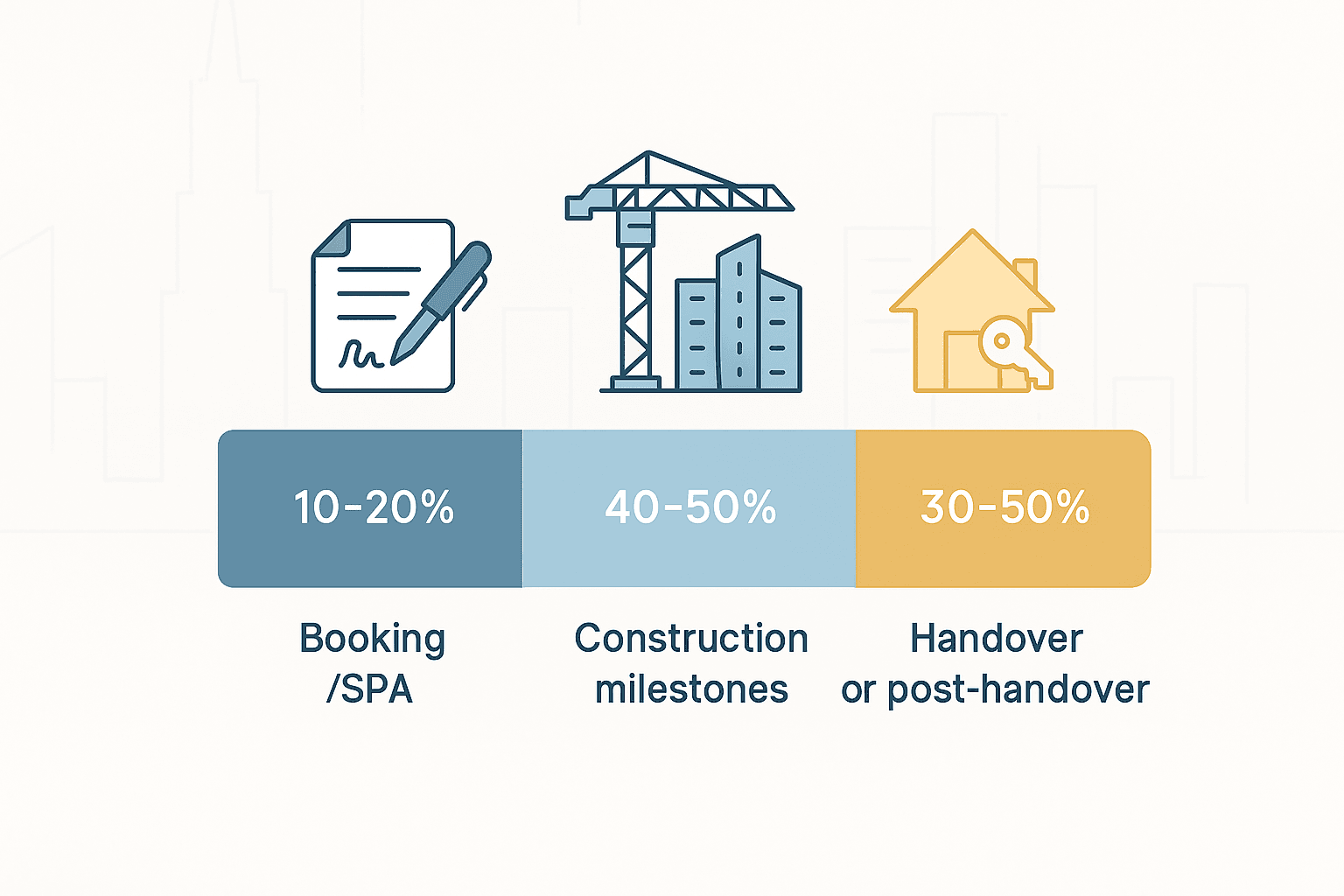
Most off-plan purchases start with a booking fee and signing the SPA (sale and purchase agreement). After that, your payments are usually tied to construction milestones – for example, a percentage at foundation, structure, and completion of key stages.
A larger chunk is due at handover when you receive the keys, and some projects offer post-handover payment plans, where the final portion is paid over 1–5 years after you move in or start renting the unit.
The key is to map this schedule against your actual cashflow and financing, not just the developer's marketing slide.
Want us to stress-test a payment plan against your cashflow?
Send us your numbers →Off-Plan vs Ready – The Real Trade-Offs

Ready Property
Pros:
- Immediate move-in or rental income
- What you see is what you get
- Easier mortgage approval
- No construction risk
Cons:
- Higher upfront cost
- Less payment flexibility
- May need maintenance/upgrades
Off-Plan
Pros:
- Lower entry price (10-30% cheaper)
- Flexible payment plans (2-5 years)
- Brand new with warranty
- Potential capital appreciation
Cons:
- 2-4 year wait until handover
- Construction/delivery risk
- Market price uncertainty
- Less liquidity during construction
Not sure which route makes more sense for you right now?
Book a 20-Minute CallSee Where Dubai Is Heading, Not Just What's Launching
Our 2026–2035 Playbook outlines our expectations for key corridors, asset types and off-plan cycles.

- Demand trends by area and asset type.
- Where off-plan stock is concentrated.
- Our view on risk, timelines and pricing cycles.
How We Help You Manage Off-Plan Risk

- We look at developer track record (delays, handover quality, service charges).
- We check escrow, RERA registration and project status before you commit.
- We highlight contract clauses that you should pay attention to (delays, variations, cancellation).
- We help plan exit scenarios (hold, rent, sell around handover).
Disclaimer: We are not a law firm or financial advisor, but we help you ask the right questions before you sign.
Off-Plan FAQs for Dubai Property
How safe is buying off-plan in Dubai?
Safer than it used to be, but not risk-free. Dubai now requires most off-plan projects to be registered with RERA, with buyer funds paid into an escrow account and released to the developer in stages linked to construction progress. That reduces outright fraud risk significantly. The real risks today are delays, changes in market conditions, and overpaying for hype. If you choose a reputable developer, a properly registered project and a sensible payment plan – and you're not banking on a quick flip – off-plan can be a reasonable play. But you should still treat it as a medium- to long-term commitment, not a guaranteed shortcut to fast profits.
What happens if the project is delayed?
Delays are not unusual with off-plan. Contracts usually give the developer some flexibility on timelines, and only after a certain grace period do compensation or cancellation rights kick in. What happens in practice depends on: the developer's policy (some may offer alternative units, small compensation, or revised handover dates), the exact wording of your SPA (sale and purchase agreement), and whether the delay is due to normal construction issues or more serious problems. In a normal delay scenario, you wait longer and your payment schedule may shift. In more serious cases (stalled projects), RERA and the escrow framework are meant to step in to restructure, cancel or transfer the project. You shouldn't assume 'it will be fine because it's Dubai' – you should assume delays are possible and plan your timelines and financing accordingly.
How do escrow and RERA protect me?
When a project is properly registered: your payments should go into a RERA-approved escrow account, not directly into the developer's general account. The funds are released in stages, tied to verified construction progress, which reduces the risk of your money being diverted elsewhere. RERA (Real Estate Regulatory Agency) oversees project registration, escrow, and compliance with key rules. In extreme cases (cancelled or severely troubled projects), RERA can step in to restructure or liquidate the project through official channels. This doesn't mean you can't lose time or face inconvenience, but it does mean you're not simply wiring large sums to an unregulated entity with no oversight. The protection is structural – you still need to choose decent developers and projects, and read your contract.
Can non-residents buy off-plan?
Yes. Non-residents can buy off-plan property in designated freehold areas in Dubai. You don't need a UAE residence visa to purchase, and many developers specifically target overseas buyers. The main differences for non-residents are: mortgage options may be more limited or require higher down payments, you may rely more heavily on power of attorney and remote signing for some steps, and you should be extra careful about who is representing you on the ground – agent, lawyer, or both. We regularly work with non-resident buyers and can structure the process so you don't have to be physically in Dubai for every step.
How do off-plan payment plans work?
Most off-plan deals follow a staged payment structure: an initial booking fee / down payment on reservation and signing the SPA, several construction-linked installments (at 10%, 30%, 60% completion), a larger handover payment when the unit is ready and you receive keys, and some projects offer post-handover payment plans, where the last chunk is spread over 1–5 years after handover. The key is to map the schedule against your actual cashflow and financing. It's not enough to see '60/40' and think it's easy – you need to know when each amount is due and what happens if you're late.
Can I sell before handover?
Often yes, but not always and not on your terms alone. Many developers allow assignment / resale before handover once you've paid a certain percentage of the purchase price (for example, 30–40%). Some may charge administrative or NOC fees for the transfer, and they may have rules about pricing or marketing. You also have to consider market reality: just because you can resell doesn't mean there's strong demand at your desired price. Flipping off-plan is not a guaranteed strategy. We treat 'can I exit before handover?' as one scenario in your plan, not the entire thesis.
What are the main extra costs when buying off-plan?
Beyond the headline property price and payment plan, you should factor in: Dubai Land Department (DLD) fee (a percentage of the purchase price – often 4% of the net price, though developers sometimes run 'DLD waived' offers), Oqood / registration fees for off-plan registration, agency fees (if applicable, depending on how the deal is structured), bank / mortgage fees if you are financing (valuation fees, processing fees, etc.), and future service charges once the building is operational. The exact numbers depend on the project and structure, but if you're not budgeting for these, you're not looking at the real cost.
How do I know if a developer is 'good' or not?
Ignore the glossy brochure and look at: past projects – Did they deliver on time or with long delays? What's the actual build quality like if you visit today? Service charge levels – Are existing owners complaining about high charges for average service? Resale and rental performance – How have earlier projects performed in the market compared to peers? How they handle issues – Snagging, defects, communication during delays. We usually shortlist developers based on track record first, then look at specific projects. If you start from hype and ads, you're doing it backwards.
Is off-plan better than buying a ready property?
It depends on your situation, not on what's being marketed this month. Off-plan can be better if: you want payment flexibility and a lower initial cash outlay, you're comfortable with waiting and can tolerate construction risk, and you're targeting new communities or upcoming areas. Ready can be better if: you need to move in or rent out quickly, you want to see exactly what you're buying – building, community, views, and you prefer certainty on timelines and actual live market performance. We usually walk clients through both routes with real numbers and timelines before recommending anything. If someone is only pushing off-plan or only pushing ready, they're selling their inventory, not advising you.
Still unsure whether a specific project is worth it? Ask us to review it with you.
Book Consultation →Ready to Build an Off-Plan Plan?
Tell us what you're considering and we'll come back with a structured view—projects we like, ones we'd avoid, and what fits your budget.